
Corporate Medical Centre
Screening
We are a specialised company focused on preventive healthcare. Our team of medical professionals offers customised screenings for both companies and private individuals. We believe in the importance of early detection and promoting a healthy lifestyle for everyone.
Invest in your employees' health today - for a healthier, more productive future!
For companies
As a company, it is important to invest in the health and well-being of your employees. Preventive screenings are an effective way to detect diseases at an early stage and ensure a healthy workplace. Offering these screenings can not only improve the health of your employees, but also contribute to your company's productivity and image.
What are preventive screenings?
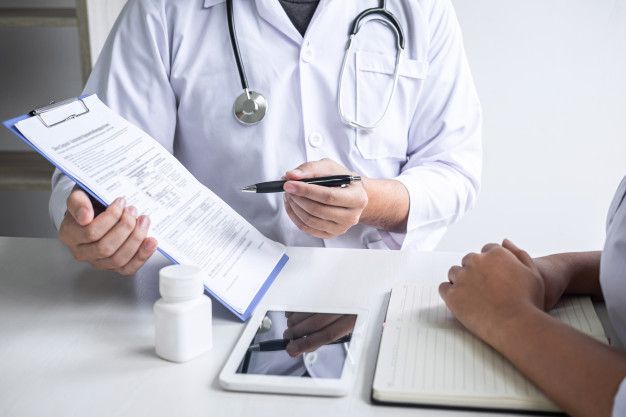
Preventive screenings are medical tests aimed at detecting diseases or conditions early, often before symptoms appear. These screenings can include blood and urine tests, cardiovascular tests, gastrointestinal tests, cancer screenings and more, depending on the needs of employees and the sector in which your company operates. Most employees are not always aware of health risks they face. Preventive healthcare allows them to detect possible conditions early, allowing them to be treated quickly and stay healthy for longer. This benefits not only the employee, but also the company as a whole.
Benefits for your business
As an employer, it is essential to have an eye in the health of your employees. Preventive screenings are an effective way to detect diseases at an early stage. This has several benefits for your business:
Healthy employees are productive employees. By detecting illnesses early, employees can be treated faster and return to work. This reduces absenteeism and promotes a healthy work culture.
While the initial cost of preventive screenings can be an investment, they can yield significant cost savings in the long run. By detecting diseases early, expensive medical treatments and long-term employee absences can be avoided.
Employees appreciate it when their health is taken seriously. Offering screenings shows that your company is committed to the well-being of its employees, which can contribute to higher employee satisfaction and loyalty.
A company that invests in the health of its employees is often seen as a responsible and caring employer. This can help attract talent and improve your organisation's reputation.
The benefits for your business:
1. Increased productivity
Healthy employees are productive employees. By detecting illnesses early, employees can be treated faster and return to work. This reduces absenteeism and promotes a healthy work culture.
2. Long-term cost savings
While the initial cost of preventive screenings can be an investment, they can yield significant cost savings in the long run. By detecting diseases early, expensive medical treatments and long-term employee absences can be avoided.
3. Improved employee satisfaction
Employees appreciate it when their health is taken seriously. Offering screenings shows that your company is committed to the well-being of its employees, which can contribute to higher employee satisfaction and loyalty.
4. Strengthening thecorporate image
A company that invests in the health of its employees is often seen as a responsible and caring employer. This can help attract talent and improve your organisation's reputation.
Invest in your employees' health today - for a healthier, more productive future!

"Health is the greatest asset. Preventive screening is the first step to maintaining it."
Investigations
At our centre, we offer a comprehensive range of medical screenings, using cutting-edge technologies and modern equipment to deliver tailored preventive care. Here are some of the screenings we offer:
Clinical examination is a major medical evaluation in which a doctor examines a patient's health through various physical inspections, tests and a detailed history (medical questioning). The purpose of clinical examination is to determine whether any health problems or conditions are present and to make a diagnosis.
Blood and urine tests are diagnostic tests that doctors use to find out more about a patient's health. These tests help to identify conditions, evaluate organ functioning, and detect diseases or abnormalities at an early stage.
An ECG (electrocardiogram) is a medical test that measures the electrical activity of the heart. It is used to assess heart function, detect arrhythmias and diagnose other heart-related problems. The ECG records the electrical signals passing through the heart, which can help identify abnormalities in the rhythm or function of the heart.
A cycling test (also called exercise test or cardiac cycling test) is a diagnostic test used to evaluate heart function during physical exercise. It is often performed to detect heart diseases, such as coronary artery disease (narrowing of the heart arteries), or to assess how well the heart functions under increased stress.
Echocardiography is a medical imaging technique that uses sound waves to create images of the heart. This technique uses ultrasound (high-frequency sound waves) to visualise and evaluate the structure and function of the heart. Echocardiography is often used to detect heart disease, assess heart function and monitor the effectiveness of treatments.
An ultrasound of the abdomen, also known as abdominal ultrasound, is a medical imaging technique that uses sound waves to create images of the organs in the abdominal cavity. This examination is often used to assess the condition of various organs in the abdomen, such as the liver, kidneys, gallbladder, pancreas, spleen and bladder.
A carotid duplex examination is a non-invasive diagnostic technique used to assess blood vessels in the neck, such as the carotid artery (arteria carotis). It is a combination of ultrasound (ultrasound) and Doppler examination that allows real-time visualisation of the structure and blood flow in the carotid vessels.
Spirometry is the most common test for measuring lung function. This involves the patient breathing into a device, a spirometer, which measures the amount and rate of air blown into and out of the lungs.The key measurements are:FVC (Forced Vital Capacity)FEV1 (Forced Expiratory Volume in 1 second)
A diopter or eye measurement determines the glasses strength needed; do not forget to bring your glasses with you. An eye pressure measurement checks that your eye pressure is normal, which helps rule out conditions such as glaucoma. Audiometry, or a hearing test, provides insight into the degree and type of hearing loss you may be experiencing.
A dermatoscan is a medical procedure used to examine and analyse the skin, especially for detecting skin cancer, such as melanoma, and other skin abnormalities. It is a non-invasive technology often used by dermatologists to monitor suspicious moles or skin changes.
Bone densitometry (also called bone density measurement or DEXA scan) is a medical test used to measure bone density to assess the risk of osteoporosis (osteoporosis). This test measures the amount of mineral substances, such as calcium, in the bone and can help determine whether bones are strong enough or weakened bones that are more susceptible to fractures.
Fat percentage measurement is a method of determining the amount of body fat in the body. This provides valuable insight into overall health and fitness. In addition, gastroscopy, performed with a flexible instrument called a gastroscope, is often used to investigate the cause of complaints such as abdominal pain, nausea, vomiting, swallowing problems, heartburn, bleeding or unexplained weight loss.
During a colonoscopy, the doctor looks at the entire course of the colon (and sometimes part of the small intestine) through an endoscope. This allows abnormalities such as polyps, inflammation or bleeding to be detected in time and treated if necessary.
With a gastroscopy, the doctor examines the oesophagus, stomach and the beginning of the small intestine through a thin camera. This examination is useful for complaints such as reflux, stomach pain or nausea. If necessary, biopsies can be taken immediately, for example to detect celiac disease or a Helicobacter pylori infection.
An EEG (electroencephalography) is a medical test that measures the electrical activity of the brain. It is used to examine brain function and is often used to diagnose neurological disorders. During the test, electrodes are placed on the scalp, which record the brain's electrical signals.v
Lung function tests provide insight into how well your lungs are working. Through measurements such as spirometry and body plethysmography, lung volume, airflow and gas exchange are evaluated. These tests help diagnose and monitor conditions such as asthma, COPD or restrictive lung disease.
Both examinations, mammography and ultrasound of the breasts, are common imaging techniques for detecting breast conditions, including breast cancer. They are often used together to get a complete picture of breast health.
Uroflowmetry is a diagnostic test used to measure the flow of urine during urination. It is a simple and non-invasive procedure that helps assess bladder and urinary tract function.
With this hearing test, we objectively measure how well you perceive sounds of different pitches and volumes. Through headphones, we listen to tones at different frequencies. This allows us to evaluate hearing loss, tinnitus or other hearing problems.


How can preventive screenings contribute to the health of your employees?
Early detection of diseases
Conditions such as cancer, heart disease and diabetes can often be treated effectively if detected at an early stage.
Improving quality of life
Preventing or managing health problems can help employees maintain a better work-life balance.
Promoting healthy behaviour
Preventive screenings can make employees aware of their health and encourage them to make healthy choices both at work and outside.