
The start of medical screening
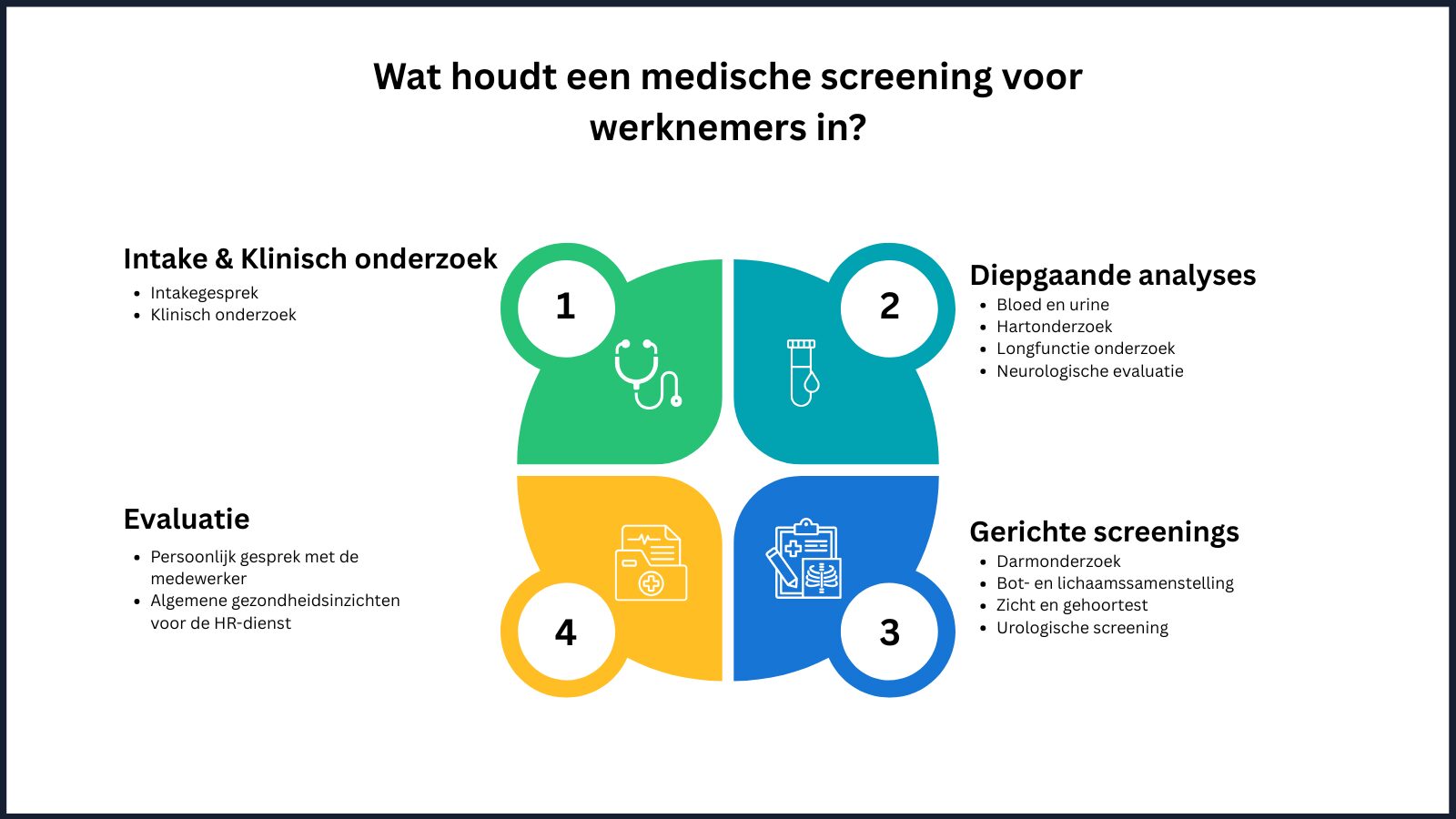
It all starts with a personal intake interview, a cardiac history. During the interview, topics such as medical history, hereditary conditions, medication use, the employee's lifestyle and current complaints are discussed. This way, the doctor already has a first impression of the employee she has in front of her.
This base is supplemented by a clinical research. This involves checking things like blood pressure, weight, heart and lung sounds and other general physical parameters.
Blood and urine analysis
A lot of conditions develop over the long term without noticeable changes. Through a blood and urine tests early changes can be detected. Possible anomalies:
Such health problems are therefore visible in the blood or urine before the employee notices it himself. This medical screening is therefore an important part of the prevention policy. In this way, you prevent unexpected medical diagnoses more quickly and ensure more targeted and proactive follow-up.
Detecting cardiovascular diseases
Cardiovascular diseases are among the most common causes of long-term employee absence. This is why this examination is part of the medical screening. There are a number of different types of examinations that can be carried out. Which one is carried out on whom depends on the employee's profile.
With these examinations, the doctor identifies arrhythmias, stenosis and other cardiovascular problems. By engaging in targeted lifestyle counselling or medical follow-up, timely intervention is possible. This reduces the chances of long-term failure.

Lung function
Optimal lung function is important for energy, concentration and overall performance. All characteristics that are important for a good employee. To find out whether your employees' lungs are working adequately, tests such as a spirometry or a comprehensive pulmonary function test be performed. This again allows early detection of conditions such as asthma or COPD. This research is particularly relevant for sectors where physical strain or exposure to certain substances occurs.
Neurological evaluation
When there are complaints around concentration, memory, dizziness or consciousness, a EEG are carried out. This test measures electrical brain activity. Disorders such as epilepsy and sleep problems can be found out. In functions where alertness and safety are crucial, this can provide interesting and, more importantly, important medical insights.
Medical imaging without surgery
Ultrasounds and scans allow organs to be assessed internally without the need for surgery. A number of investigations are possible here:
These various tests allow early detection of structural abnormalities such as breast, colon or skin cancer
Bowel and stomach investigations
From middle age, around 50 years, the importance of preventive bowel screenings increases. Most abnormalities arise at this age but are not detected until later. Investigations such as a colonoscopy or a gastroscopy detect abnormalities in the colon and small intestine early. For employers, this translates into lower risks of long-term oncology dropouts.
Composition of bone and body
In an ageing employee population or physically demanding jobs, it is an important part of medical screening.
These insights then support targeted health programmes around exercise and nutrition during follow-up interviews.
Urological screening
Through a uroflowmetry urine flow is measured. This provides information on how bladder function is doing and, for male workers, also prostate function. Again, this examination prevents complaints and later complications.
Sight and hearing
In several jobs, vision and hearing play a crucial role. Therefore, it is also important to carry out tests such as eye measurement, eye pressure check and a hearing test. This is especially relevant for jobs within manufacturing, logistics, transport and office environments with intensive screen use.
So what does comprehensive medical screening benefit your organisation?
This medical screening is not an isolated doctor's appointment, but a strategic tool within modern HR policies.It contributes concretely to:
By structurally monitoring the health of your employees, you shift towards a proactive human resources policy. Want to know how comprehensive medical screening can be tailored to your organisation, sector and employee profiles? A tailor-made programme ensures you invest in what really makes an impact. Make an appointment and invest in preventive healthcare for your business.
Health is the greatest asset. Preventive screening is the first step to maintaining it.
At the Medical Centre, care, trust and expertise go hand in hand. We offer quality medical screenings in a casual atmosphere.